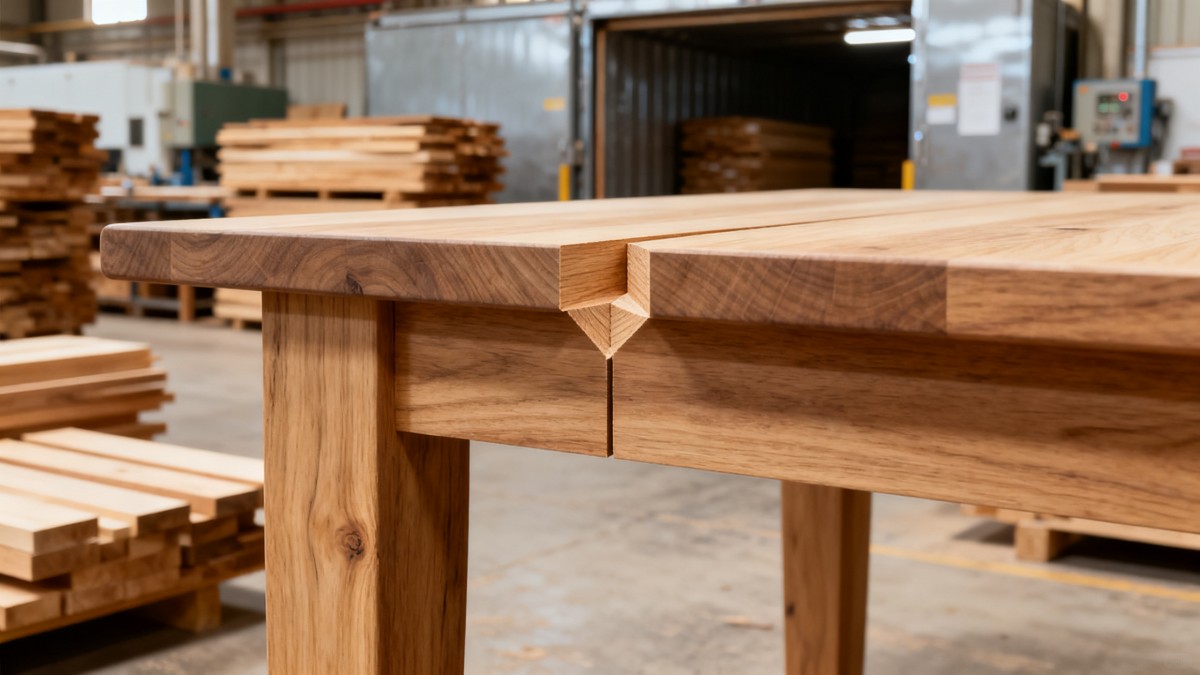
How to Evaluate Export Solid Wood Home Furniture Quality Before Placing an Order
Before placing a bulk order, surface beauty is never enough.
For export solid wood home furniture, true quality shows up in structure, moisture control, material honesty, and factory discipline.
A product may look premium in photos but still fail during shipping, assembly, or end-user use.
That is why a practical evaluation method matters before you confirm a supplier.
This guide breaks down how to assess export solid wood home furniture quality in a way that supports better sourcing decisions.
Start with Material Authenticity
The first checkpoint is simple: verify what “solid wood” really means in the quotation.
In actual business, this is where many quality disputes begin.
Some suppliers use solid wood only on visible parts.
Hidden panels, backboards, or drawer bottoms may switch to plywood, MDF, or low-grade substitutes.
That does not always make the product unacceptable.
But it must be disclosed clearly and priced accordingly.
When evaluating export solid wood home furniture, request a full material breakdown for every component.
- Main frame wood species
- Panel and backboard materials
- Drawer side and bottom materials
- Leg, rail, and support structure materials
- Veneer, finger-jointed, or full-length board usage
Premium hardwoods such as black walnut, white oak, red oak, cherry, ash, beech, and European oak usually offer better stability and market value.
Still, species alone does not guarantee reliable export solid wood home furniture.
Grade consistency matters just as much.
Check whether the supplier controls sapwood ratio, knot size, color variation, and grain matching across one order.
Check Moisture Content and Drying Control
If there is one hidden factor that affects durability most, it is moisture content.
Poorly dried wood can crack, warp, shrink, or loosen after arrival.
This becomes more obvious when export solid wood home furniture moves across climates.
A product shipped from a humid region to a dry market faces real movement stress.
Ask the supplier for target moisture ranges based on destination market conditions.
For many export programs, kiln-dried wood within a controlled range is essential.
It is also worth asking how wood is stored after kiln drying.
Good drying can be undone by poor warehouse management.
Useful questions include the following:
- Is the wood naturally dried, kiln-dried, or both?
- What moisture range is recorded before production?
- How often is moisture tested during manufacturing?
- Can random meter readings be shown during inspection?
A reliable export solid wood home furniture supplier should answer these questions without hesitation.
Evaluate Joinery and Structural Strength
Next, look beyond the finish and focus on how the furniture is built.
Strong joinery directly affects service life, shipping safety, and user satisfaction.
For export solid wood home furniture, weak internal construction often leads to claims later.
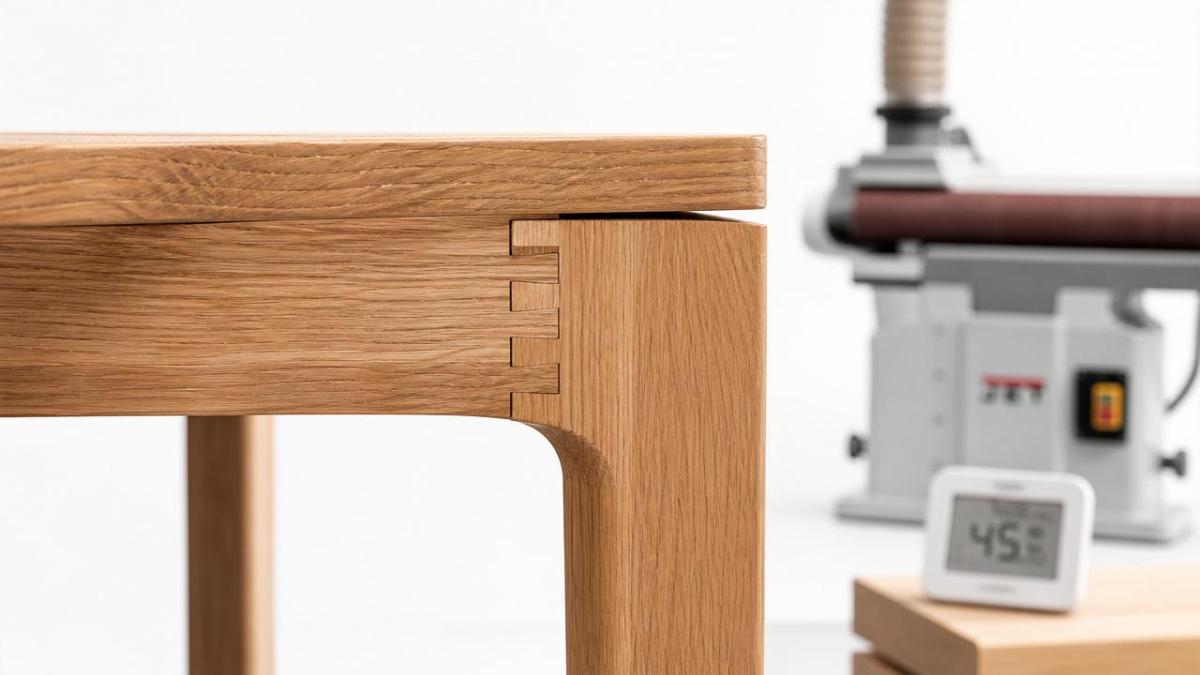
Traditional mortise-and-tenon joinery is often a positive sign, especially for tables, chairs, beds, and cabinets.
It usually provides better long-term stability than simple stapling or low-grade screw fixing.
That said, the best choice depends on product design and price positioning.
During sample inspection, check these points:
- Whether joints are tight and evenly aligned
- Whether chairs or tables wobble under pressure
- Whether bed rails and slats have enough reinforcement
- Whether drawers slide smoothly without tilting
- Whether doors open evenly and close flush
A good sample should feel stable when handled.
There should be no creaking, no sharp movement, and no visible stress at connection points.
Inspect Surface Finishing and Detail Consistency
Finishing quality tells you a lot about factory discipline.
Even high-grade timber can lose value if sanding and coating are poorly managed.
For export solid wood home furniture, finishing also affects odor control, compliance, and return risk.
Run your hand across edges, corners, tops, and inner surfaces.
You should not feel rough sanding marks, glue residue, or uneven coating thickness.
Color should stay consistent within acceptable natural variation.
The wood grain should look natural, not artificially blocked by heavy paint.
More importantly, confirm what coating system is used.
Eco-friendly finishing is increasingly important in global furniture sourcing.
Low-odor and low-emission coatings help protect compliance and brand reputation.
Pay close attention to these detail signals:
- Uniform sheen across visible surfaces
- Clean transitions around handles and corners
- No obvious color patching or filler overuse
- No strong chemical smell after unpacking
Review Hardware, Functional Performance, and Safety
Even when the main structure is solid, poor hardware can reduce overall product quality.
This is especially important for export solid wood home furniture with drawers, doors, extension leaves, or knock-down construction.
Check hinges, runners, connectors, handles, and support fittings carefully.
They should match the product’s expected use cycle.
Light domestic hardware may not be suitable for demanding retail channels.
Function testing should include repeated opening, closing, pulling, and loading.
A well-made export solid wood home furniture sample should operate smoothly and quietly.
If assembly is required, ask for instructions and test actual installation time.
Safety should also be verified early.
Watch for sharp edges, unstable tall units, weak support parts, and poor load-bearing design.
Assess Factory Systems, Quality Control, and Export Readiness
Product quality does not come from the sample alone.
It comes from repeatable factory systems.
This is a major point when selecting an export solid wood home furniture manufacturer.
Ask how quality is controlled from timber selection to final packing.
A dependable supplier usually has clear checkpoints for raw materials, machining, assembly, finishing, and pre-shipment inspection.
The more transparent the process, the lower your sourcing risk.
It also helps to review export readiness beyond manufacturing.
- Packing protection for long-distance shipping
- Carton marking accuracy and SKU control
- Ability to support OEM or ODM requirements
- Consistency across repeat orders
- Documentation for materials and compliance needs
For buyers managing hospitality projects, retail programs, or brand manufacturing, stable execution is often more valuable than a low initial quote.
Use a Simple Evaluation Table Before Order Confirmation
To compare suppliers fairly, use a scoring method instead of relying on impression alone.
This makes export solid wood home furniture evaluation more objective.
This kind of checklist helps align technical review, pricing discussion, and final approval.

Final Thoughts for Smarter Sourcing
Choosing export solid wood home furniture should never depend on catalog images alone.
A better decision comes from checking materials, moisture, structure, finish, hardware, and factory systems together.
When these elements are verified early, the order becomes safer, more predictable, and easier to scale.
In a competitive sourcing environment, quality evaluation is not an extra step.
It is part of cost control, brand protection, and long-term supplier management.
Before confirming your next export solid wood home furniture order, use a structured sample review and factory assessment to reduce risk and improve results.