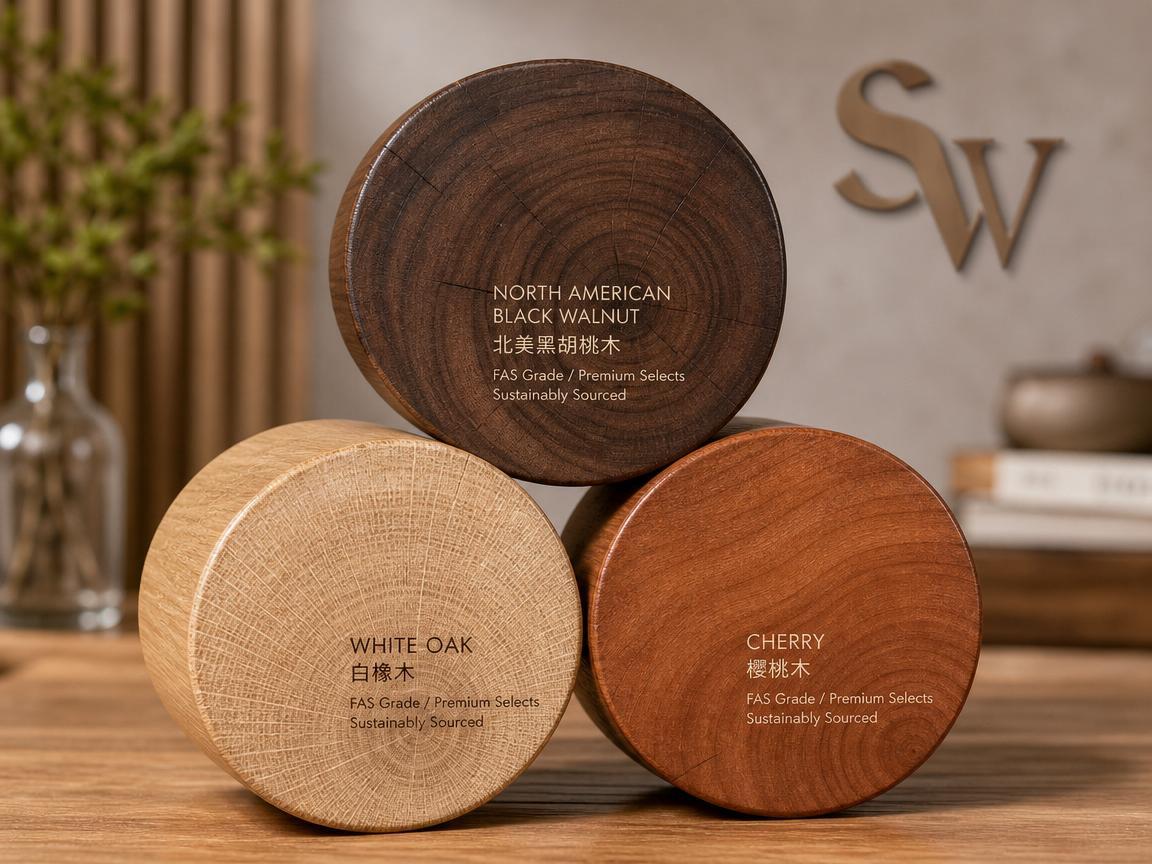
Why does the quoted price rarely reflect the full cost?
When companies export solid wood home furniture, the first quote often looks simple. In practice, the real cost picture is layered and more revealing.
A factory price usually covers core production only. It may not fully include material upgrades, packaging changes, testing, documentation, or destination-specific compliance.
That is why OEM and bulk purchasing decisions should be judged by total landed cost, not by unit price alone.
For export solid wood home furniture, hidden cost movement often starts with wood species, moisture control, joinery complexity, and surface finishing standards.
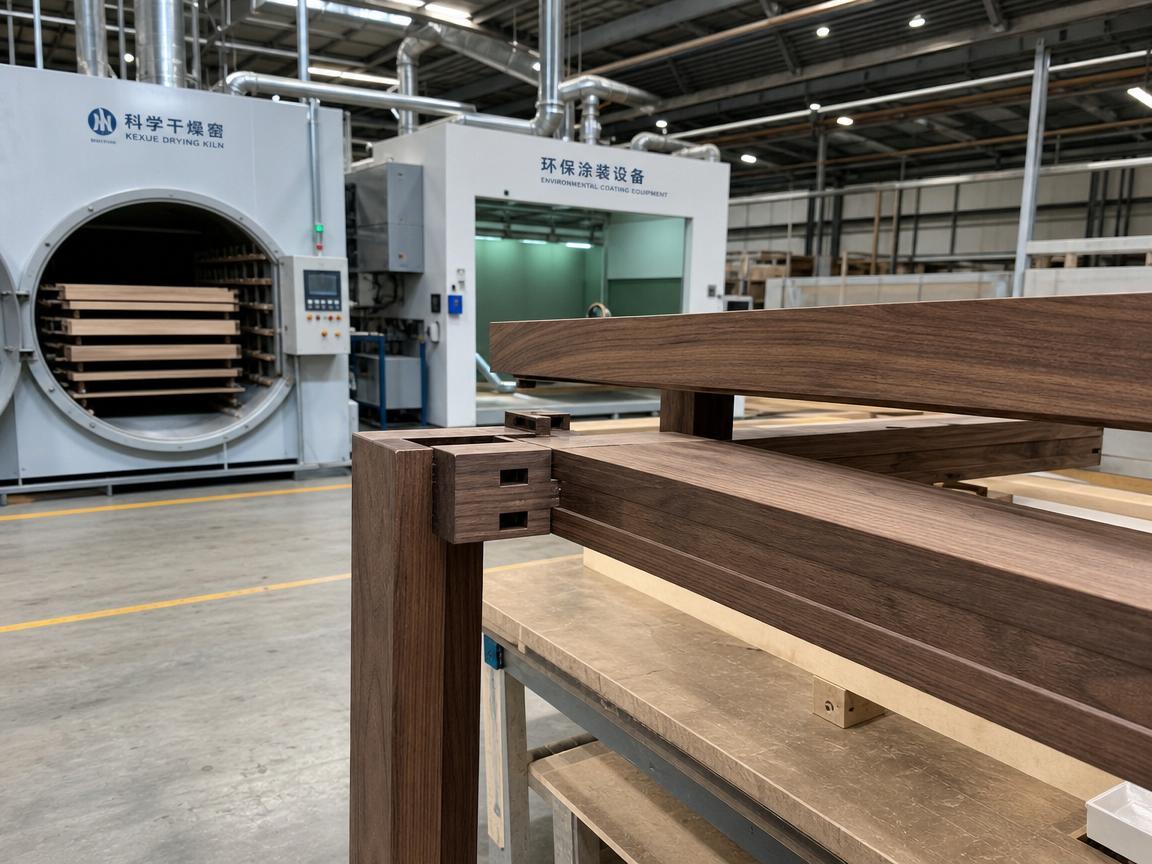
A supplier using authentic hardwood, scientific kiln-drying, and stable eco-friendly finishing will rarely be the lowest bidder. Yet those steps reduce deformation, odor issues, and after-sales claims.
In other words, a cheaper quote can become expensive after freight damage, cracking, rework, or delayed customs clearance.
Which material choices raise or reduce OEM furniture cost most?
Material is usually the largest cost driver in export solid wood home furniture, but the issue is not only species name.
Grade consistency, board yield, color variation, and drying performance all influence the final number.
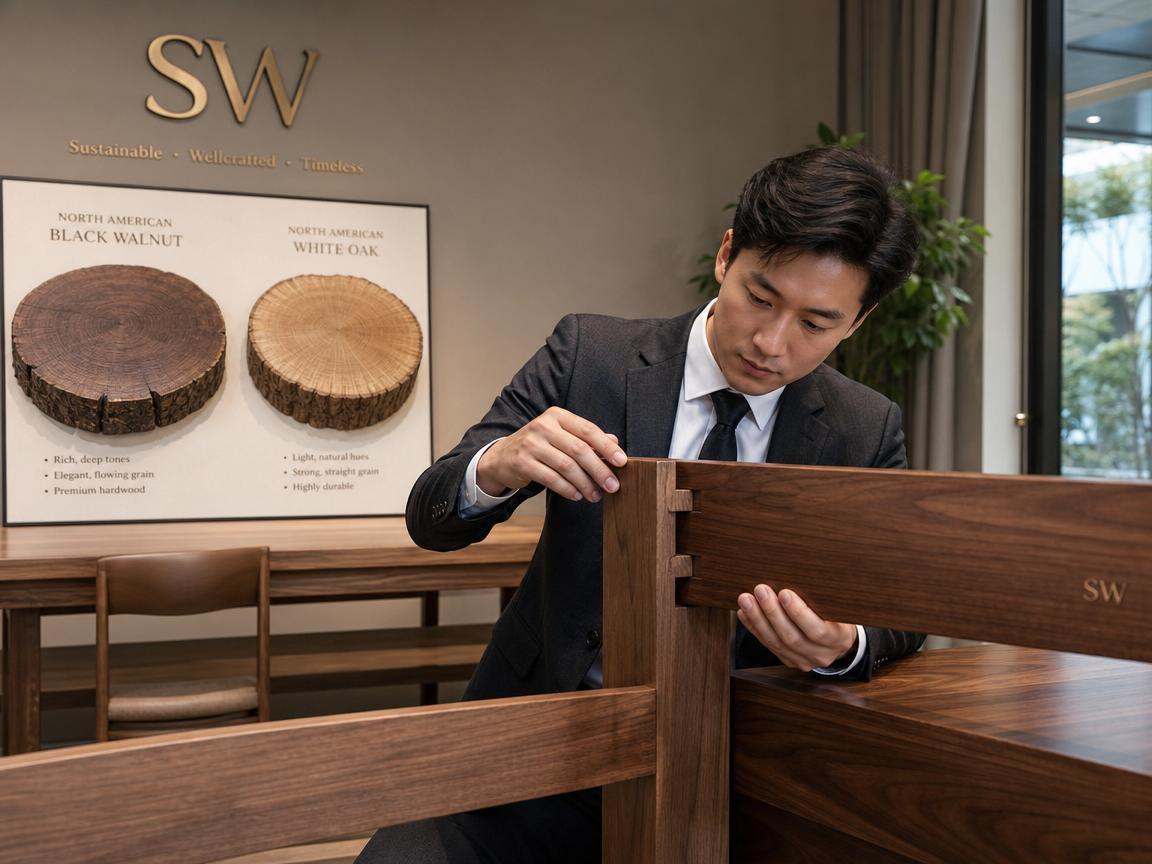
North American Black Walnut, White Oak, Cherry, and European Oak generally sit at the higher end. Ash, Beech, and Red Oak may offer a more balanced cost structure.
Still, lower-priced timber does not always mean lower total cost. Some woods machine faster, finish more evenly, or perform better in humid environments.
The more useful question is this: what material supports the target market without overspending on features customers will not value?
For example, bedroom and dining collections often require visual consistency across multiple pieces. That can increase lumber selection cost and waste ratio.
Meanwhile, minimalist or Nordic lines may tolerate more natural grain variation. That usually improves yield and helps control raw material spend.
- Solid wood thickness affects both material usage and shipping weight.
- Wide panels require better drying and joining control.
- Premium wood species need stricter color matching and defect selection.
- Eco-friendly coatings may cost more upfront but reduce compliance risk.
When reviewing export solid wood home furniture offers, ask for a clear material specification sheet. That single document often explains major price gaps.
How much do craftsmanship and construction methods matter in bulk purchasing?
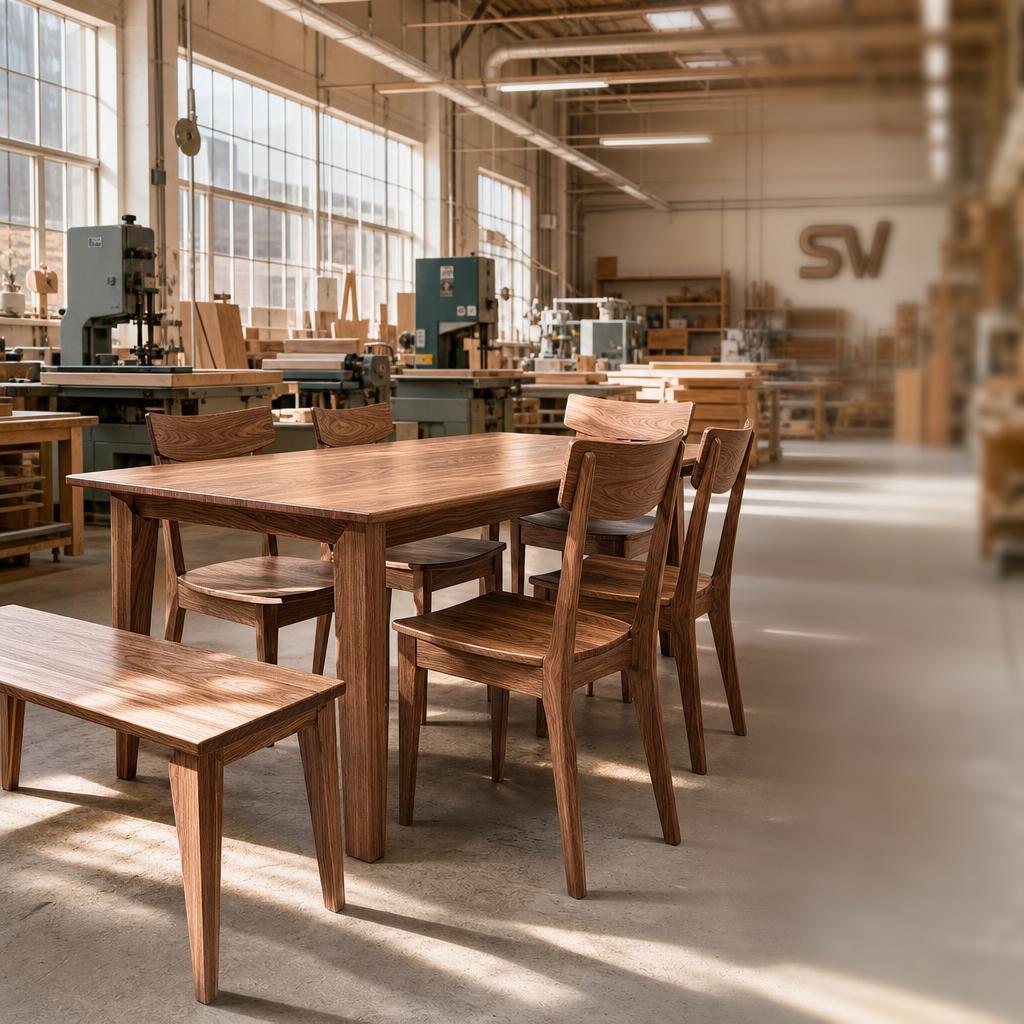
They matter more than many buyers expect. Craftsmanship changes labor hours, defect rate, durability, and even packaging design.
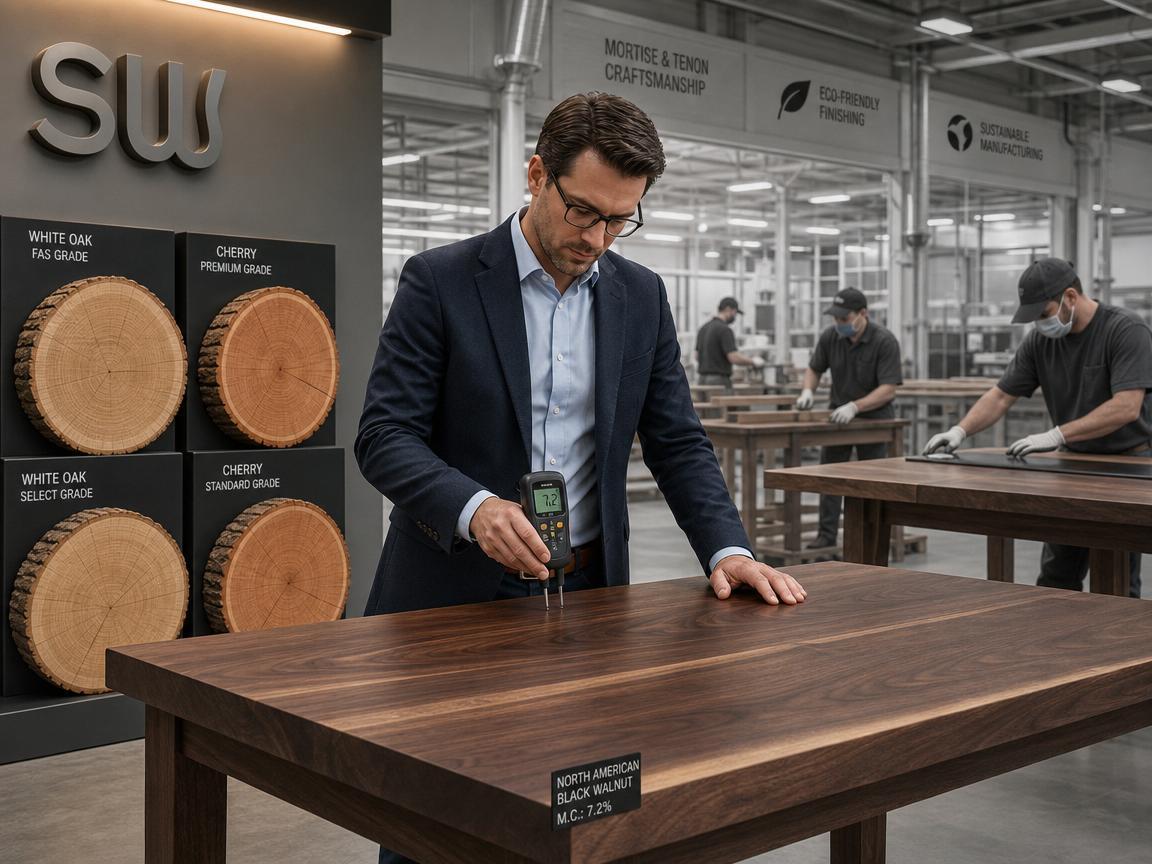
Traditional mortise-and-tenon construction, hand-sanding, and precise cutting add labor cost. However, they also improve structural strength and long-term use.
That is especially relevant for export solid wood home furniture sold under a private label, where returns can damage both margin and reputation.
In bulk purchasing, the cheaper option may rely on simpler joints, thinner components, or unstable auxiliary materials. Those savings are visible only before the goods are used.
A more practical way to compare quotes is to check what is built into the product standard.
This comparison is often more useful than asking which supplier is simply cheaper.
Where do OEM customization costs usually appear?
Customization rarely increases cost in just one place. It spreads across engineering, sampling, production setup, material sourcing, and packing adaptation.
Size changes may look minor, but they can alter timber yield, carton dimensions, loading efficiency, and hardware requirements.
Color adjustments also need care. A custom stain on White Oak behaves differently from the same stain on Beech or Ash.
For export solid wood home furniture, that means sampling cost should be viewed as validation spending, not just an extra fee.
The same logic applies to branded packaging, manuals, barcode labels, and drop-test standards. These details affect freight safety and retail readiness.
A sensible OEM review often includes these checks:
- Whether the custom size reduces container loading efficiency.
- Whether the selected finish matches the wood grain and target style.
- Whether repeated parts can share hardware and packaging formats.
- Whether MOQ rises because of special material or process changes.
In actual sourcing, standardizing a few variables often lowers total OEM cost more effectively than negotiating a small unit discount.
What logistics, packaging, and compliance costs are easy to underestimate?
This is where many budgets drift. Furniture is bulky, damage-sensitive, and highly affected by destination rules.
Export solid wood home furniture must be packed for long-distance transport, climate change, stacking pressure, and handling variation at multiple checkpoints.
Stronger cartons, inner foam, corner protection, and knock-down design can raise packaging cost. They may also reduce freight claims and improve container utilization.
Compliance brings another layer. Some markets require documentation related to materials, coatings, labeling, or fumigation treatment for wood packaging.
Need-to-know costs often include testing fees, certificate preparation, carton mark revisions, and customs paperwork corrections.
Before approving an order, it helps to compare the following points side by side.
How can buyers judge long-term value instead of chasing the lowest quote?
The strongest buying decisions usually come from comparing cost drivers against product purpose, market positioning, and reorder potential.
If a collection targets premium home retail, authentic hardwood, fine sanding, and eco-friendly finishing may support stronger sell-through and fewer claims.
If the goal is broad-volume distribution, design simplification, optimized dimensions, and shared components may improve margins without damaging perceived quality.
A reliable export solid wood home furniture partner should be able to explain cost logic clearly. That includes raw timber choice, process control, lead time, and risk points.
More importantly, the supplier should help balance aesthetics, durability, and budget instead of pushing unnecessary upgrades.
For solid wood programs covering living room, dining room, bedroom, or study furniture, a stable manufacturing base can also reduce indirect costs through consistent quality and easier replenishment.
A useful next step is to build a cost review sheet before order confirmation. Include material grade, construction method, finish standard, package type, compliance items, and expected claim rate.
That approach makes OEM and bulk purchasing less reactive. It also helps turn export solid wood home furniture sourcing into a controlled, repeatable investment decision.