Wholesale Solid Wood Furniture Cost Factors Explained
Understanding the real cost drivers behind wholesale solid wood furniture is essential for balancing quality, margin, and supply stability.
A low quote may look attractive at first.
But in furniture procurement, lower unit price does not always mean lower total cost.
Material grade, moisture control, construction, finishing, packaging, and logistics all shape the final result.
This also means wholesale solid wood furniture should be evaluated as a cost structure, not just a product line.
When purchase volumes are large, even small differences in process standards can create major impacts on returns, claims, and replacement costs.
In practical sourcing, the best decision often comes from understanding where money is spent and which items protect long-term value.
Raw Timber Species Directly Change Price Levels
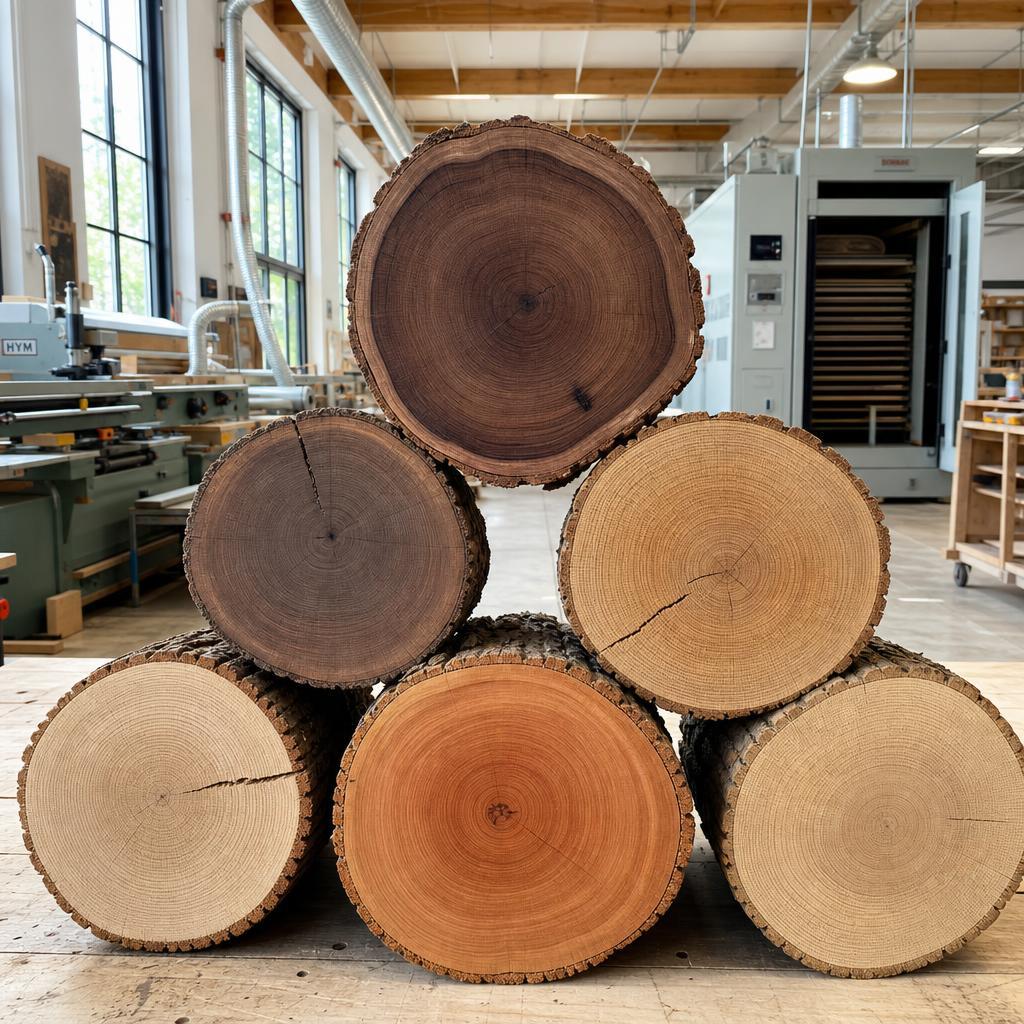
The first major cost driver in wholesale solid wood furniture is wood species.
Not all hardwoods carry the same market value, machining behavior, or visual appeal.
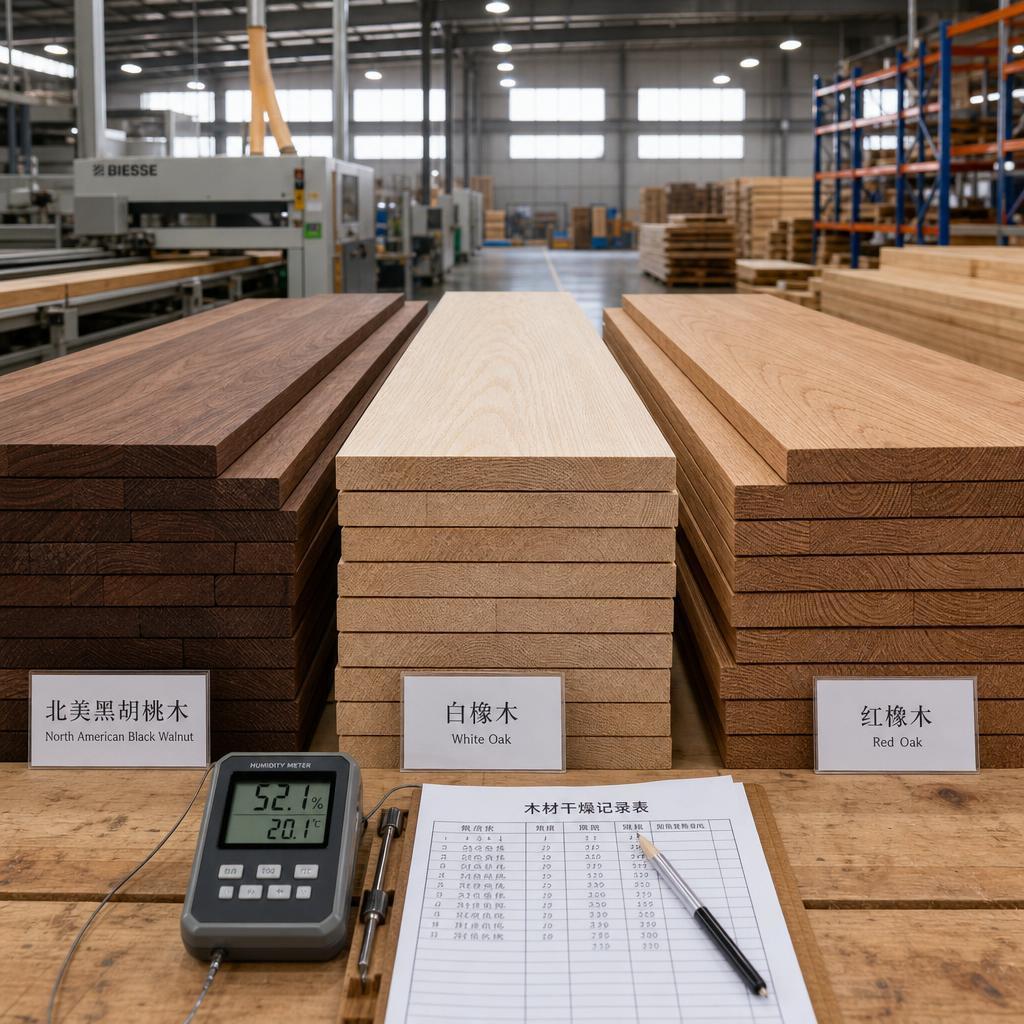
North American Black Walnut usually sits at the premium end.
White Oak, Red Oak, Cherry, Ash, Beech, and European Oak each fall into different price bands.
The cost gap comes from resource availability, log quality, grain consistency, hardness, and export market demand.
More importantly, species selection affects more than appearance.
It influences machining loss, drying difficulty, structural stability, and finishing performance.
- Denser hardwoods often increase tooling wear and labor time.
- Rare species usually bring stronger price volatility.
- Uniform grain can improve yield and visual consistency.
- Lower-grade timber may reduce price but raise quality risk.
For wholesale solid wood furniture, asking only for “oak” is often not enough.
You need clarity on species, grade, origin, and whether the visible surfaces use full solid wood throughout.
Kiln-Drying Standards Affect Hidden Financial Risk
A major difference between reliable and risky wholesale solid wood furniture lies in moisture control.
Scientific kiln-drying costs money, time, equipment, and technical supervision.
Yet it protects against some of the most expensive post-delivery problems.
Wood that is not dried to a suitable moisture range may crack, warp, shrink, or distort after shipment.
These issues usually appear later, when replacement is more expensive than prevention.
This is especially important for cross-border orders moving across climates.
A supplier with controlled drying procedures often offers better total procurement value, even if the ex-factory price is higher.
- Ask for target moisture content by destination market.
- Confirm whether drying records are documented.
- Check if wood rests after drying before machining.
- Review claim history related to cracking or warping.
In cost reviews, this area is often underestimated.
But poor moisture management can turn a good-looking furniture order into a margin problem.
Craftsmanship and Joinery Determine Durability
The next cost factor is craftsmanship.
In wholesale solid wood furniture, construction quality directly affects product life and after-sales exposure.
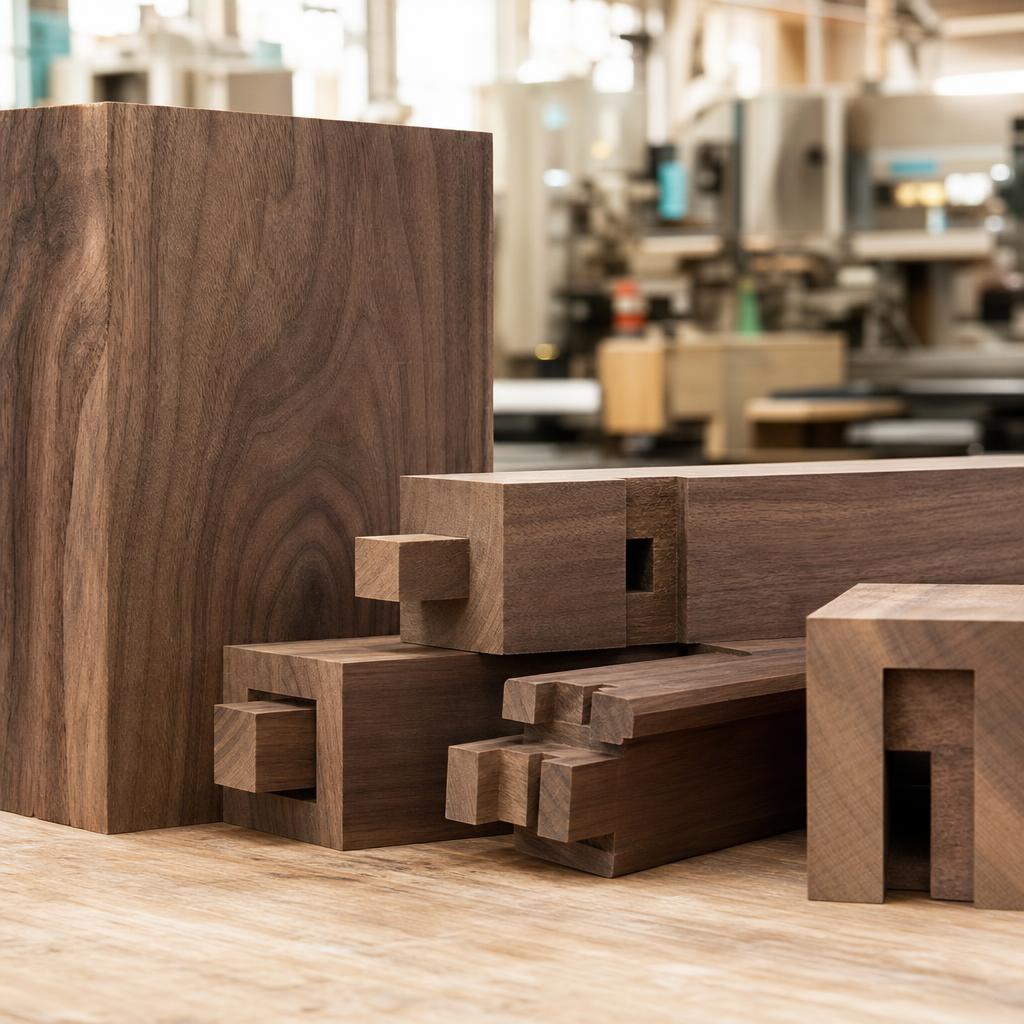
Traditional mortise-and-tenon joinery, precision cutting, hand-sanding, and careful assembly all require skilled labor.
That labor increases cost, but it also improves load-bearing performance and structural stability.
By contrast, weaker joints may lower the initial quote while increasing breakage, wobble, and return rates.
From a purchasing perspective, good craftsmanship works like insurance built into the unit price.
If a supplier can explain its production standards clearly, cost discussions become much more transparent.
Finishing, Safety, and Compliance Add Real Value
Finishing is another meaningful cost layer in wholesale solid wood furniture.
Eco-friendly coatings, stable color application, and smooth touch performance are not low-cost processes.
However, they matter in resale markets where odor, emissions, and surface durability influence customer satisfaction.
This matters even more for bedroom, dining, and family-use furniture.
A cheaper coating system may save money upfront.
Still, it can create complaints about smell, peeling, inconsistent color, or poor wear resistance.
In actual business, those complaints often cost more than the original savings.
- Confirm what coating system is used.
- Ask whether finish samples match mass production.
- Review surface testing or internal QC checkpoints.
- Check compliance needs in target markets.
For wholesale solid wood furniture, safety and finish quality should be treated as cost control tools, not optional extras.
Customization Changes Both Price and Procurement Efficiency
Many buyers need OEM or ODM support.
That makes customization a major factor in wholesale solid wood furniture pricing.
Size adjustments, special colors, new materials, branded packaging, and market-specific design changes all affect cost.
Some changes raise material use.
Others increase setup time, sampling cycles, tooling, and inventory complexity.
Even so, customization is not automatically expensive in a negative sense.
When aligned with market demand, it can improve sell-through and reduce slow-moving stock.
The key is to separate value-adding customization from low-return variation.
- Prioritize modifications tied to real sales data.
- Reduce unnecessary SKU expansion.
- Bundle shared components across collections.
- Confirm MOQ impact before approving new variants.
This approach keeps wholesale solid wood furniture programs flexible without letting complexity erode profitability.
Packaging, Damage Control, and Export Logistics Matter More Than Expected
A common sourcing mistake is focusing on factory price while overlooking delivered-condition cost.
For wholesale solid wood furniture, packaging and logistics are major parts of cost protection.
Solid wood items are heavy, sensitive to corners, and vulnerable during container loading and long transit.
Better packaging increases cost, but poor packaging increases claims, replacements, and warehouse handling losses.
Recent changes in freight markets make this even more relevant.
Higher logistics uncertainty means product protection and loading efficiency now have clearer financial consequences.
- Review carton strength and internal protection details.
- Ask about drop-test or shipment experience.
- Check container loading plans for space efficiency.
- Estimate damage rate as part of landed cost.
In many cases, smarter packaging improves total cost more effectively than pushing for a small unit-price discount.
Supplier Capability Influences Long-Term Cost Stability
The final factor is supplier capability.
This is where wholesale solid wood furniture decisions move beyond product costing into supply chain economics.
A primary manufacturing enterprise with stable raw material sourcing, in-house production control, and export experience can offer more predictable outcomes.
That predictability matters for budgeting, replenishment planning, and margin protection.
When suppliers manage timber selection, kiln-drying, precision cutting, joinery, sanding, finishing, and QC under one system, cost visibility improves.
It also becomes easier to control consistency across repeated orders.
For living room, dining room, bedroom, and study collections, continuity often matters as much as initial pricing.
A supplier that supports OEM, ODM, hospitality projects, and bespoke adjustments can also reduce coordination costs across product programs.
A Practical Cost Review Checklist
- Verify wood species, grade, and material authenticity.
- Check kiln-drying standards and moisture targets.
- Review joinery, sanding, and structural details.
- Confirm eco-friendly finishing and compliance needs.
- Measure customization impact on MOQ and lead time.
- Include packaging, damage risk, and logistics in landed cost.
- Assess supplier stability, QC discipline, and repeat-order consistency.
Wholesale solid wood furniture is not a category where the cheapest offer always wins.
The better decision usually comes from comparing lifetime value, claim risk, and supply reliability.
When you understand the real cost drivers, supplier conversations become more precise and negotiation becomes more strategic.
That is the point where wholesale solid wood furniture sourcing shifts from price chasing to smart procurement.
If the next order requires stable quality, authentic hardwood, flexible customization, and dependable export support, start by auditing cost structure before comparing quotes.