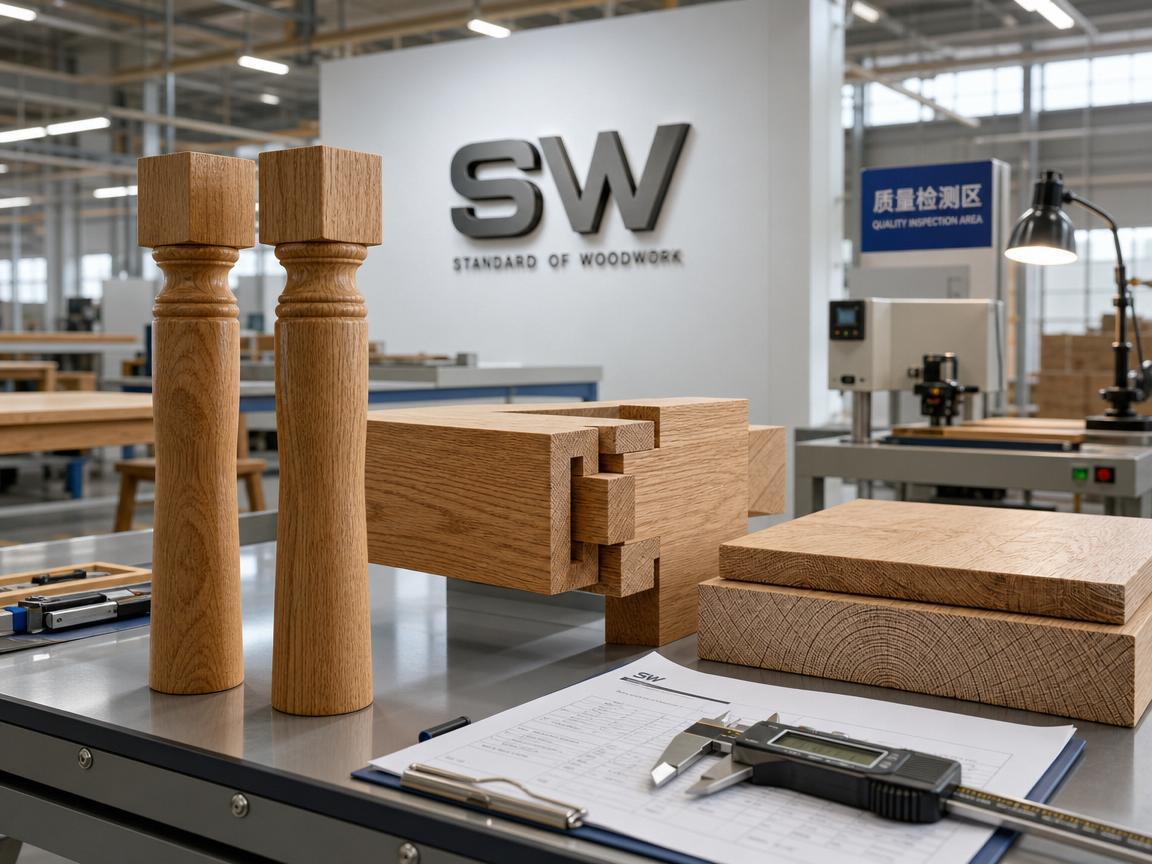
How to Evaluate Wholesale Solid Wood Furniture Quality

Evaluating wholesale solid wood furniture quality requires more than a quick visual check.
For business purchasing, appearance matters, but material honesty matters more.
A polished surface can hide weak joinery, mixed materials, or unstable moisture control.
That is why wholesale solid wood furniture should be assessed from structure, safety, and supply consistency together.
This guide explains what to check before you compare quotations or place volume orders.
It also helps reduce after-sales disputes, unstable quality, and hidden procurement risk.
Start with the real material, not the product photo
The first step in evaluating wholesale solid wood furniture is confirming what “solid wood” actually means.
Some suppliers use the term loosely for products with veneer, plywood cores, or mixed engineered parts.
In real sourcing work, that difference directly affects durability, price logic, and market positioning.
Ask for a clear material breakdown for every component, not only the visible panels.
The top, legs, frame, drawer sides, back panels, and internal supports should all be specified.
A reliable wholesale solid wood furniture factory will explain where hardwood is used and why.
What authentic timber evaluation should include
- Wood species identification, such as Black Walnut, White Oak, Red Oak, Ash, Beech, or Cherry.
- Source consistency across batches, especially for color, grain, density, and hardness.
- Whether finger-jointed boards are used, and where they are applied.
- Whether secondary materials appear in hidden structural parts.
- How the supplier handles knots, sapwood, mineral streaks, and natural grain variation.
A trustworthy partner does not oversell perfect uniformity, because genuine wood naturally varies.
Check moisture control before checking the finish
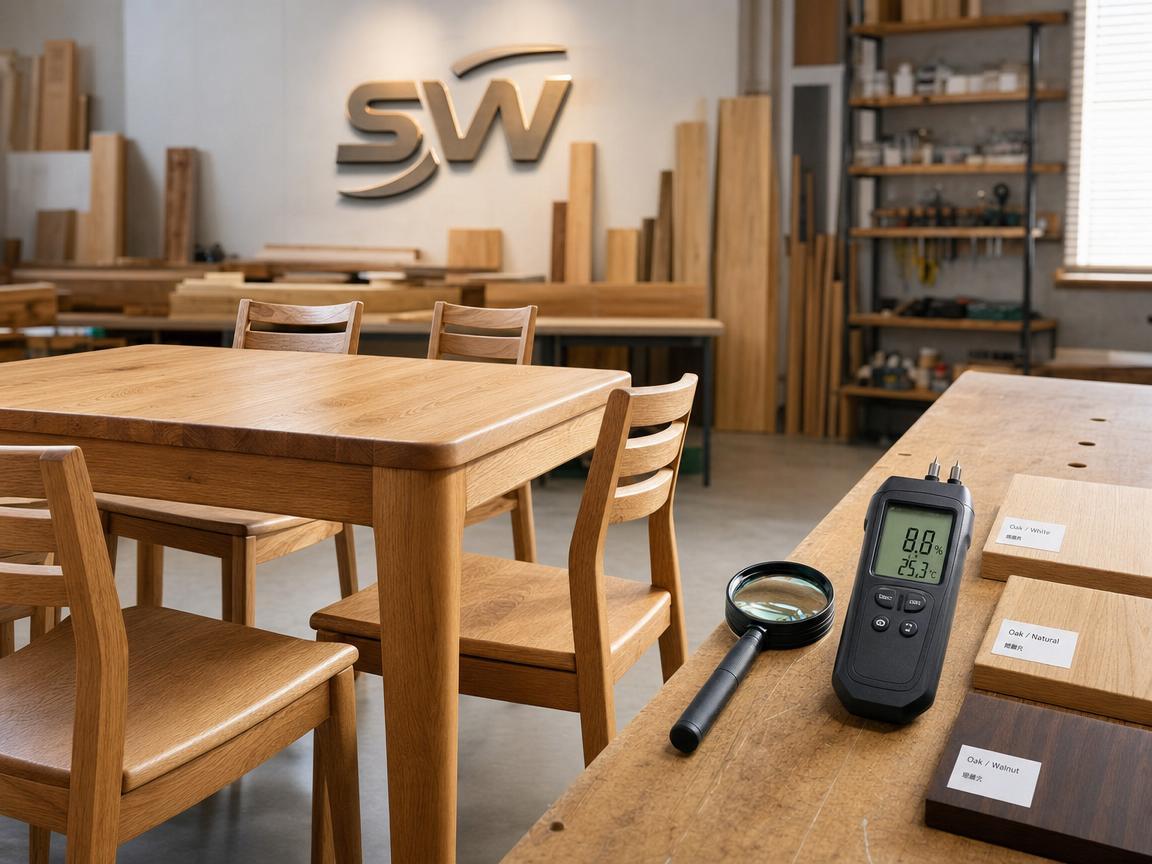
One of the biggest quality signals in wholesale solid wood furniture is moisture stability.
If timber is not properly kiln-dried, defects often appear after shipping, not before inspection.
That usually means cracking, warping, joint separation, uneven doors, or unstable tabletops.
More importantly, those problems create claim costs and damage brand trust in the destination market.
Ask suppliers about their kiln-drying process, target moisture range, and testing frequency.
They should also explain how they adapt standards for different climates and export regions.
Practical moisture questions to ask
- What is the target moisture content before machining and assembly?
- How is moisture tested, by batch or by individual components?
- How long does the wood rest after kiln-drying?
- What controls are used during rainy or humid production periods?
- Can the factory provide moisture records for your selected model?
When a supplier answers these clearly, wholesale solid wood furniture quality becomes easier to predict.
Look closely at joinery, structure, and load-bearing design
Good wood alone does not guarantee good furniture.
The structural design of wholesale solid wood furniture determines long-term performance in daily use.
This is especially important for dining tables, bed frames, cabinets, and high-frequency hospitality projects.
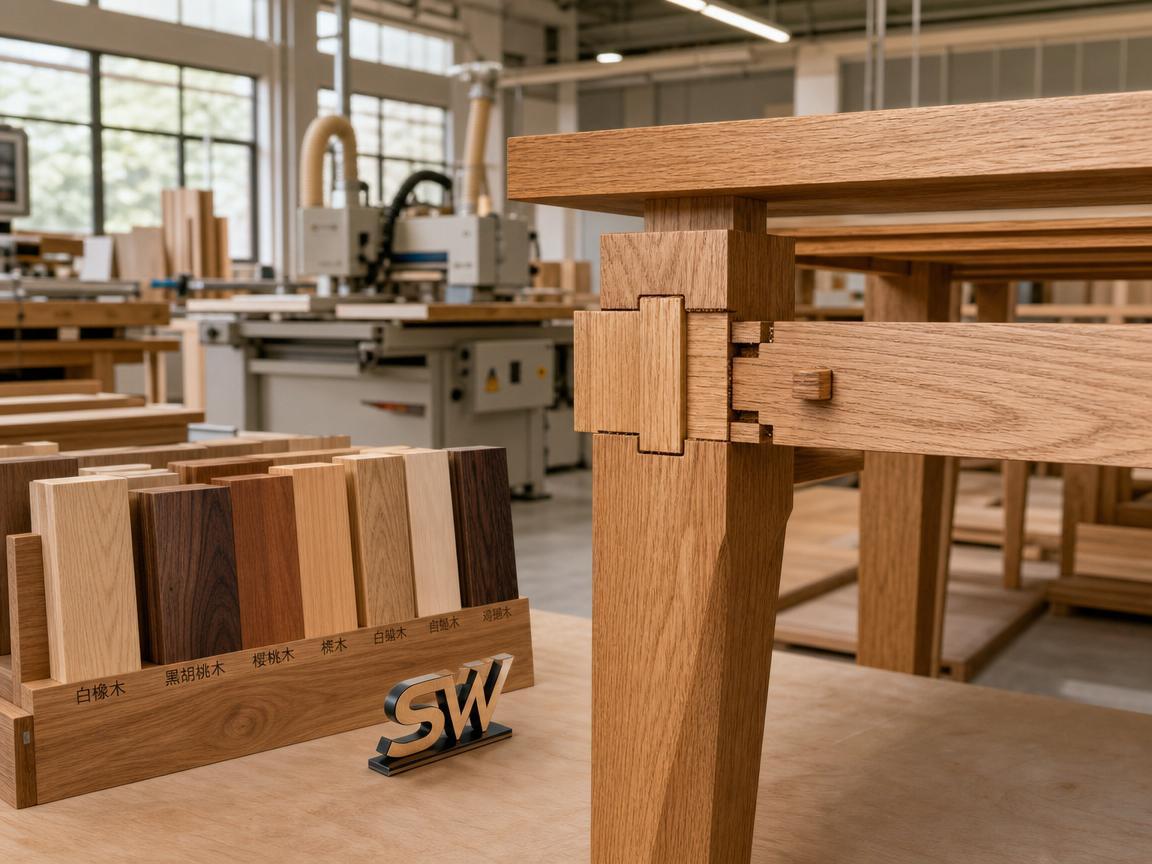
Traditional mortise-and-tenon joinery is still a strong quality marker when properly executed.
It improves stability and reduces dependence on weak fastener-only construction.
At the same time, modern connectors can also perform well when engineering is solid.
Key structural signs of better wholesale solid wood furniture
- Tight, clean joints without obvious gaps or filler-heavy repairs.
- Balanced frame geometry that does not wobble on a flat floor.
- Smooth drawer operation with aligned tracks and stable side panels.
- Reinforced stress points on chairs, beds, and long table spans.
- Thoughtful expansion gaps that allow natural wood movement.
In practice, a stable structure lowers return rates far more than surface polishing alone.
Evaluate surface finishing for safety and consistency
Finishing is where many buyers focus first, but it should be judged with more discipline.
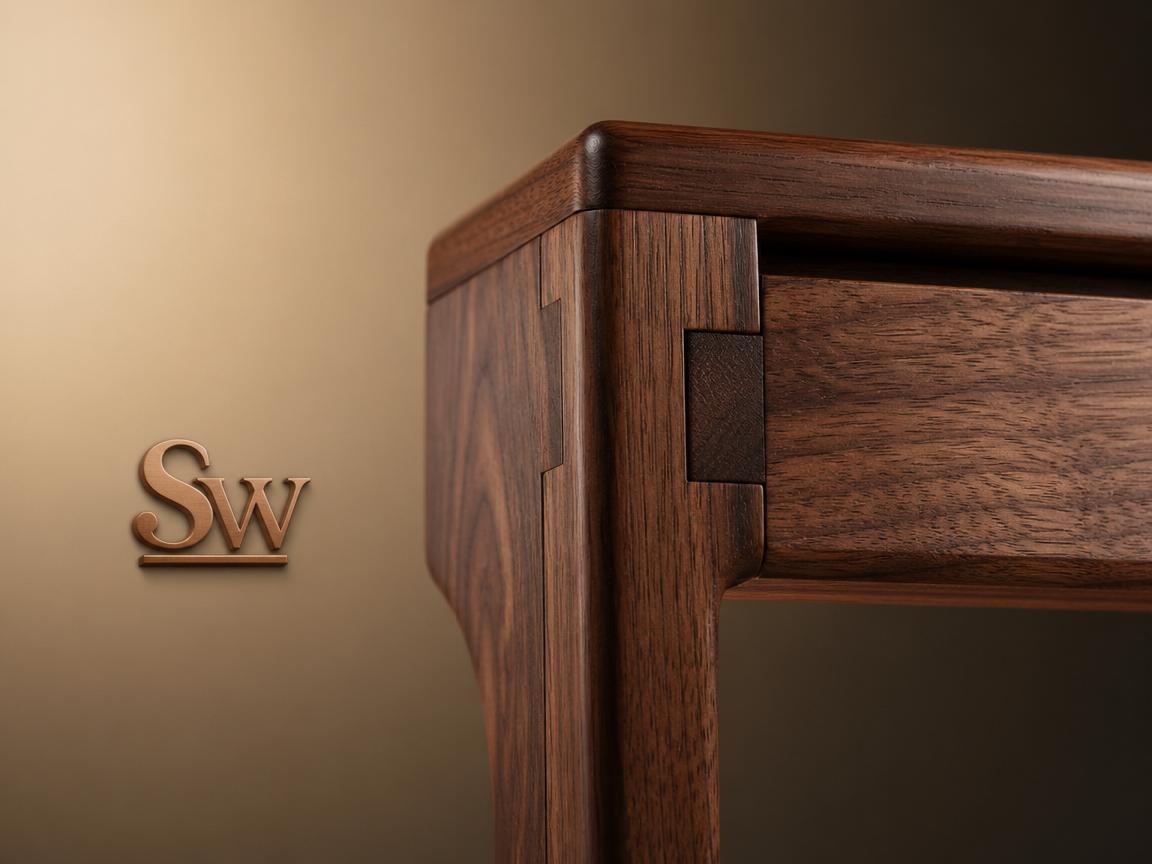
High-quality wholesale solid wood furniture should have a finish that protects the wood without hiding defects.
Look for even color tone, smooth touch, and consistent sheen across matching items.
Watch for dust particles, uneven coating edges, orange peel texture, and oversprayed hardware areas.
Those are often signs of rushed finishing control.
For export markets, finish safety matters as much as appearance.
What to confirm about the finish
- Whether the coating is eco-friendly and compliant with target market requirements.
- How many sanding and finishing stages are used.
- Whether the grain remains natural instead of being heavily masked.
- How color matching is controlled across repeated orders.
- How the finish performs against scratches, stains, and routine cleaning.
This matters even more when wholesale solid wood furniture is sold under a private label.
Assess manufacturing discipline, not only sample quality
A beautiful sample does not guarantee reliable batch production.
For wholesale solid wood furniture, the real test is consistency across quantity, time, and customization needs.
That is why factory capability should be reviewed alongside the product itself.
A strong manufacturer usually has clear production standards from timber selection to final packing.
More importantly, they can explain those standards without hesitation.
Reliable factory indicators
- Stable sourcing of premium hardwood species.
- Documented quality control at cutting, assembly, sanding, and finishing stages.
- Experience with OEM, ODM, contract manufacturing, or hospitality projects.
- Ability to manage custom dimensions, finishes, and material combinations.
- Packing methods designed for export safety and lower transit damage.
This is where primary manufacturers often offer better control than trading-only suppliers.
Use a simple decision matrix before placing orders
To compare wholesale solid wood furniture options fairly, build a practical scoring method.
This keeps decisions from being driven only by sample appearance or short-term pricing.
This kind of matrix makes wholesale solid wood furniture selection much more objective.
It also creates a useful internal record for future vendor reviews.
Why supplier transparency often predicts product quality
In many cases, the strongest signal is not the showroom sample.
It is how openly the supplier discusses timber grades, process details, and quality limitations.
A serious wholesale solid wood furniture manufacturer usually welcomes technical questions.
They know informed buyers value consistency more than marketing language.
That also means they can support long-term programs, custom collections, and repeat batch control.
When transparency is low, hidden substitution risk is usually higher.
Final takeaway for smarter wholesale solid wood furniture selection
Choosing wholesale solid wood furniture is really about verifying substance behind the presentation.
Start with authentic hardwood, then confirm moisture control, joinery quality, finish safety, and manufacturing discipline.
If a supplier can document these points clearly, procurement risk becomes easier to manage.
If they cannot, a low quote may become an expensive mistake later.
For better decisions, request material lists, process details, finish information, and batch quality records before ordering.
That approach leads to stronger supplier partnerships and more dependable wholesale solid wood furniture programs.